Company profile
The company profile is shown in its original language.
Heidland gilt seit Jahrzehnten als erfahrener Partner im Bereich der Fest-Flüssig-Trennung. Durch direkte Kontakte zu den wichtigsten Filteranlagenherstellern sind wir immer gefordert unsere Produkte weiter zu entwickeln, um den neuesten Anforderungen zu entsprechen. Produkte wie Sieb- und Filtergewebe, Filterbänder, Zentrifugentücher, Filtertücher, Filterbeutel und Sonderkonfektionen für individuelle Problemlösungen finden Einsatz in der Autoindustrie, Chemie, Pharmazie, Lebensmittelindustrie, in Kraftwerken, in der Farb- u. Lackindustrie und im Maschinenbau.
Heidland always been renowed as an experienced partner in the field of solid-liquid separation. Through direct contacts to the main filter system manufacturers, we are always called up to develop our products to meet the latest requirements. Mesh and filter cloth, filter belts and bags, press cloth, centrifuges towels and special assemblies for individual solutions are used in automotive, chemicals, pharmaceuticals, food industry, power plants, dystuff industry and mechanical engineering.
Product areas 18
Industries
What's new 2
The new TPU-closure

- easiest handling
- over-/or underlapping not required
- securing with special retaining brackets
- enormous flexibility
- also suitable for small roll diameters
- significant time savings during assembly
- high chemical resistance e.g. compared to cooling lubricants
- low material build-up
- additional assembly tools not needed
- pintle wire not necessary
- further sealing not required
For further information, please contact us.
Composite Filter 4.0
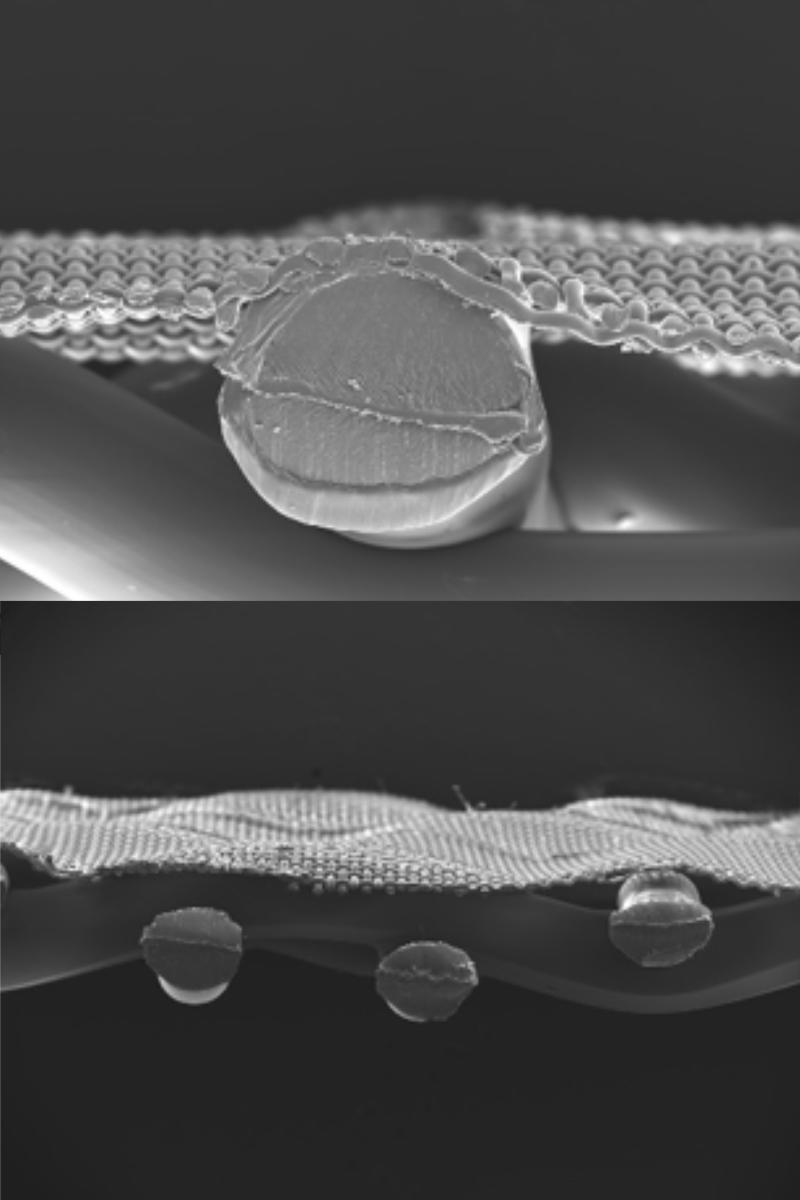
Increasing challenges to the filtering process have led us to think about a groundbreaking innovation in the design of composite filters made of a fine fabric (filter) and a coarse fabric (supporting fabric).
While in the past ordinary double-layer filter media were woven and later point-glued, we make use of a relatively new technology from the yarn industry. The carrier fabric is partly made of so-called core-jacket yarns.
The fine mesh is connected to the coarse mesh under pressure and temperature. The coat of individual yarns in the supporting fabric melts and the liquid plastic combines with the upper cover layer of fine fabric when it catches a cold.
This has enormous advantages for the filtering process:
- fully renewable
- improved chemical resistance
- higher throughput capacity
- smallest filter fineness possible
- material 100% sorted
- can be used in the food industry.