Company profile
Automatically translated with DeepL.
A Mikropor iniciou a sua trajetória em 1987 com a paixão por criar a «tecnologia do futuro» e tornou-se um dos principais fabricantes de soluções de filtração de ar atmosférico e de sistemas de tratamento de ar comprimido para diversos setores.
Ao acompanhar de perto os mais recentes desenvolvimentos tecnológicos, os produtos e soluções «Best in Class» da Mikropor são apreciados por clientes em mais de 140 países.
O crescimento sustentável da empresa tem sido impulsionado pela sua paixão pela inovação e pelo compromisso com a qualidade, bem como pela sua dedicação à tecnologia. A Mikropor é uma empresa ambientalmente responsável que valoriza as pessoas, ao mesmo tempo que desenvolve produtos que vão ao encontro das necessidades e expectativas dos clientes.
Com esta missão, a Mikropor continua a afirmar-se como uma das marcas mais reconhecidas a nível mundial, expandindo a sua presença global no campo da filtração tecnológica e contribuindo para um planeta mais saudável.
Product areas 1
Industries
What's new 1
Better Indoor Air Quality Decreases the Risk of Coronavirus
According to the standard assumptions, the COVID-19 Virus, which has a strong pathogenic structure same as the other common viruses, can be transmitted by both small and large droplets (droplets that are produced during coughing, sneezing and speaking) through air and also by touching surfaces (surface to person) or physically contacting people (person to person). The particles (droplets) that are generated by sneezing, coughing, speaking and breathing spread through the air extremely easily and cause significant damage to the human health.
Most indoor HVAC systems increase the risk of infection since they operate by recirculating indoor air. In order to break the infection chain, it is absolutely critical to limit or if possible, block the pathogen transmission through air. Increasing the air quality by supplying 100% clean air minimizes the risk of respiratory tract infections and prevents epidemic outbreak especially in crowded places such as shopping centers, hotels, offices, gyms, and plazas.
Insufficient number of filter housings, low fan static pressure and inadequate particle filtration in air handling units cause allergic reactions to dust and symptoms of diseases like asthma. An air handling unit unfortunately mixes the clean atmospheric air with indoor air, filters this mixture through some specific filtration systems and delivers it right back into the living quarters. Therefore, it is tremendously important to minimize the above-mentioned risks and deliver clean air into these places by conducting an effective air filtration process with ‘’HEPA (High Efficiency Particulate Air) Filters’’
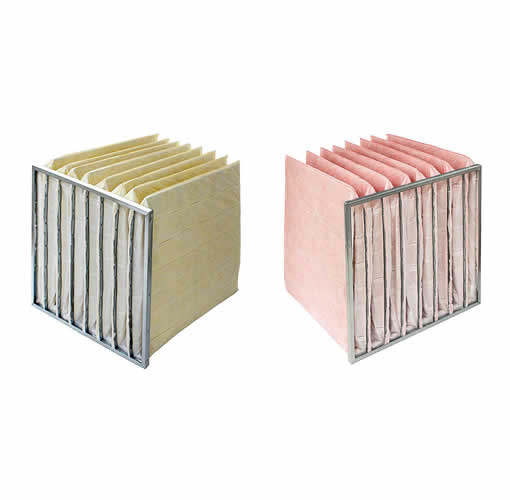
ASHRAE (American Society of Heating, Refrigerating and Air-Conditioning Engineers), mentioned that indoor air handling units must be restored with new filtration systems featuring maximum possible efficiency and portable air purifiers with HEPA efficiency should be used in indoor environments (“ASHRAE Position Document on Infectious Aerosols” published in April, 2020). Furthermore, REHVA (Federation of European Heating, Ventilation and Air Conditioning Associations) points out that AHU Filters must have maximum possible efficiency and should be replaced on a regular basis.
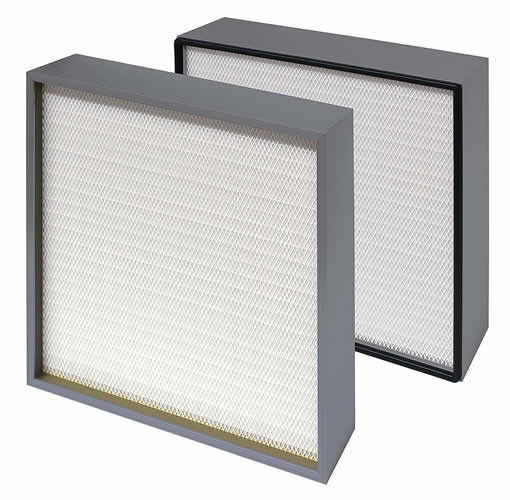
HEPA (High Efficiency Particulate Air) Filters should be mainly used to prevent increase in virus concentration especially in the systems or places with limited cooling and heating capacity or when recirculation can not be avoided. The sizes of common viruses range from 20 nm (0.02 micron) to 500 nm (0.5 micron) and the COVID-19 virus which has a circular structure has a size around 125 nm (0.125 micron) on average. According to the EN1822 standard the minimum efficiency of HEPA filters are 99.95% for class H13 at the overall value of most penetrating particle size (MPPS).
MPPS stands for ‘’Most Penetrating Particle Size’’ and it is acknowledged as 0.17- 0.20 micron. As mentioned above, the minimum efficiency of HEPA filters are 99.95% for class H13 and they already fit into this range. This efficiency value gets higher for smaller and bigger size of particles. This phase is basically defined as ‘the diffusion effect of filtration’ in which the filter’s dust holding capacity gets higher for 0.125 micron particles. (approximately %99.99)
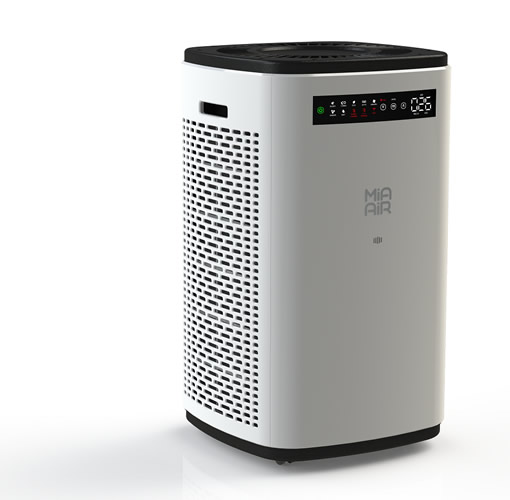
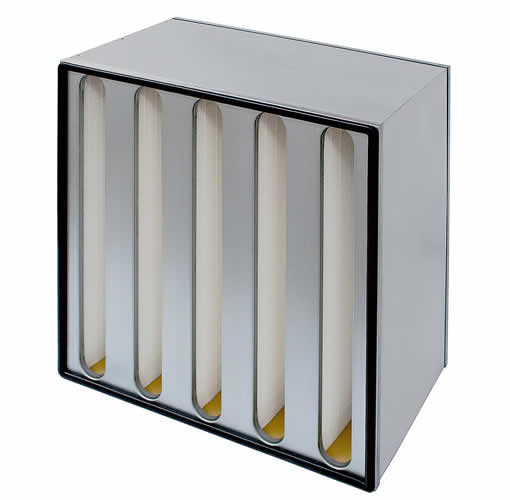
Mikropor, has been offering solutions to the needs of several different industries and keeps on dominating the market with its innovative products including HEPA, ULPA and variety of other HVAC filters and also next generation Compressed Air Equipments. The brand new Mia Air (developed by Mikropor) has the priviledge to be the first ever air purifier to include H13 efficiency class Hepa Filter in Turkey. Mikropor is delighted and proud to announce that Mia Air captures up to 99.99% of the smallest airborne particles even in this ongoing pandemic, supplies clean air to indoor spaces and offers healthy and peaceful living quarters to people.
Images 4