Company profile
Automatically translated with DeepL.
1985 yılında kurulan Taizhou Haotian Industrial Fabric Co., Ltd., toz ve sıvı filtreleme teknolojisi araştırma ve geliştirme alanında uzmanlaşmış olup, filtreleme projeleri için kapsamlı çözüm tasarımları sunmaktadır. 2000 yılında başlayan ihracat faaliyetleri kapsamında, 30’dan fazla ülkeden müşterilerle uzun vadeli işbirlikleri kurulmuştur. Haotian, 5 üretim hattına sahiptir; yüksek sıcaklık filtre malzemesi için yıllık üretim kapasitesi bir milyon metrekareye, normal sıcaklık filtre malzemesi için ise beş milyon metrekareye ulaşmaktadır. Haotian, sürekli olarak yeni ürünlerin araştırılmasına kendini adamaktadır ve Haotian markasıyla bir dizi özgün ürün geliştirmiştir. Haotian, çeşitlilik sunan ve kişiye özel ürünler sunarak, filtrasyon konusundaki farklı gereksinimlerinizi karşılar.
Product areas 4
Industries
What's new 3
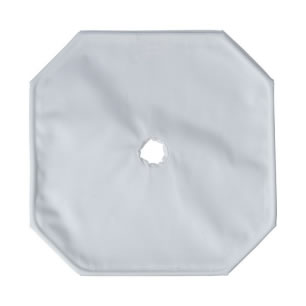
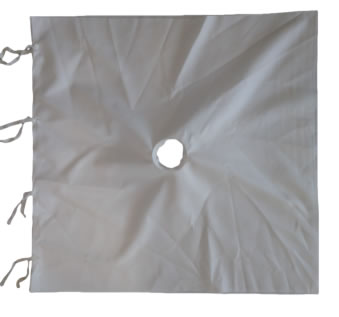
Press Plate Filter Cloth
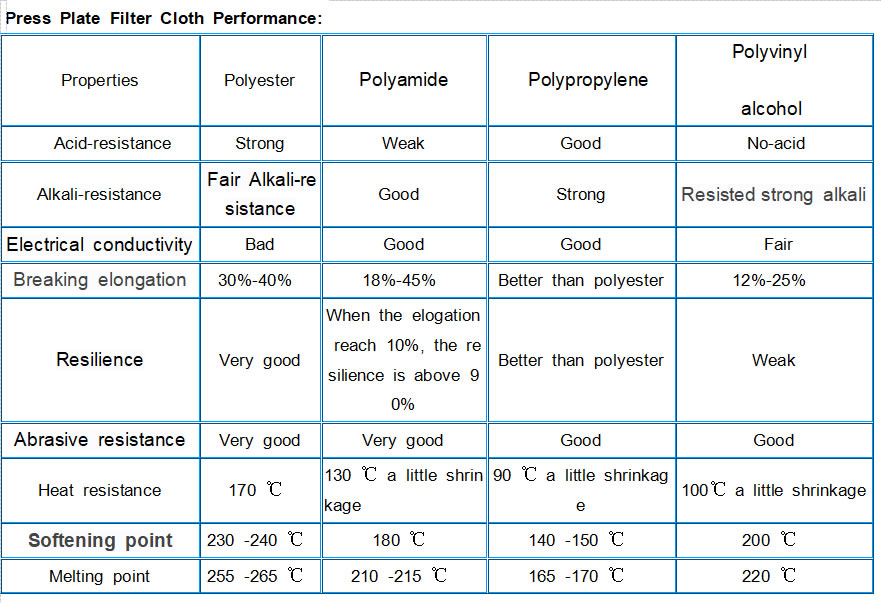
The filter cloth is a very important component of the filter press, and whether the filter press can work ideally depends largely on the performance of the filter cloth and its ability to achieve solid-liquid separation without blockage or damage. Filter cloth can be divided into two categories based on fiber material. One category is natural fibers such as cotton, wool, silk, and hemp fibers; Another type is chemically synthesized fibers, such as polyester, nylon, polyacrylonitrile, vinylon, acrylic, polyester fibers, etc. According to the yarns that make up the filter cloth, it can be classified into mono-filament yarn, multi-filament yarn, and short fiber yarn. The characteristic of filter cloth woven from single fibers is that it is not easily clogged and has good cake unloading performance. The characteristics of multi-filament filter cloth are high tensile strength, good cake unloading and regeneration performance. The characteristics of short fiber yarn filter cloth are good particle retention performance and the sealing performance it can provide. The filter cloth woven from mono-filament yarn is called "mono-filament fabric"; The filter cloth woven from multi-filament or short fiber yarn is collectively referred to as "multi-filament fabric".
The filtration performance of filter cloth made by different weaving methods varies:
- Filtration rate: plain weave filter cloth<twill weave filter cloth<satin weave filter cloth<non-woven filter cloth;
- Moisture content of filter cake: plain weave filter cloth>twill weave filter cloth>satin weave filter cloth>non-woven filter cloth;
- Filtrate transparency: plain weave filter cloth<twill weave filter cloth<satin weave filter cloth<non-woven filter cloth;
- Unloading performance: non-woven filter cloth<plain filter cloth<twilll filter cloth<satin filter cloth;
- Regenerative performance: satin filter cloth<twill filter cloth<plain filter cloth<non-woven filter cloth;
- Service life: non-woven filter cloth<satin filter cloth<plain filter cloth<twill filter cloth;
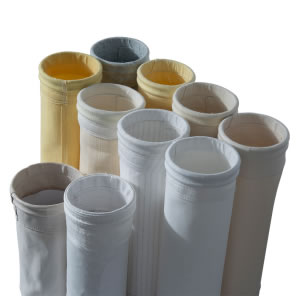
Dust Collect Filter Bags
Hotian can make filter bags according to customer’s demand for reaching optimum filtration performance. Various types of needle felt material can be used for different applications. They are effective in reducing dust emission level according to industries requirement. Hotian insist on helping customer to find the appropriate material for making filter bags. We also provide bags installation instruction and bag replacement service.
Technical Specifications:
All of our filter bags are available in different weights, treatments and coatings to suit the industry application. Standard and specific media materials are:
- Polyester needle felt
- Polypropylene needle felt
- Metamax (Aramide / Nomex )
- Glass fiber needle felt
- Homopolymer Acrylic needle felt
- PTFE
- P84
- PPS
- FNS Series Felt
- Glass/PTFE composite Felt
Available Coating & Treatment:
- Anti-static Treatment With Carbon Fiber
- Anti-static Treatment With Copper Wire
- Anti-static Treatment With Stainless Steel Fiber
- Water & Oil Repellent
- PTFE impregnation
- PTFE Coating
- Media with PTFE lamination
Sizes:
Customized sizes are available in cylindrical tube bags & pocket type bags
Configurations:
- Snap Band Type
- Flange Collar Type
- Rubber Cord Type
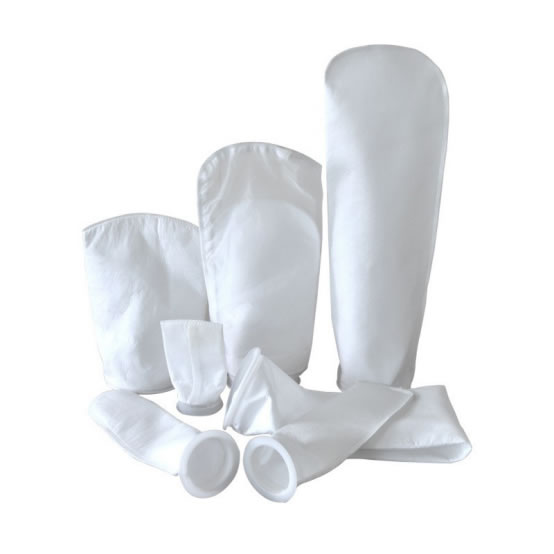
Liquid Filter Bag
Liquid filter bag is a type of industrial filtration product designed to remove contaminants from liquids by passing them through a porous fabric or mesh bag. These bags are widely used in industries such as pharmaceuticals, food and beverage, chemicals, water treatment, and oil & gas to ensure product purity, protect equipment, and meet regulatory standards.
Key Features of Liquid Filter Bags:
Material:
Made from various filter media such as:
- Polypropylene (PP) – Cost-effective, chemical-resistant, for general-purpose filtration.
- Nylon (PA) – Good for high-temperature and high-viscosity liquids.
- Polyester (PE) – Durable and resistant to abrasion.
Applications:
- Removing particulates from water, chemicals, solvents, oils, and beverages.
- Pre-filtration to protect pumps, membranes, and other sensitive equipment.
- Clarification of liquids in food & pharmaceutical production.
Compatibility:
Resistant to acids, alkalis, solvents, and high temperatures (depending on material).
Common Housing Types:
- Single-bag housings (for small-scale filtration).
- Multi-bag housings (for high-flow industrial systems).
Advantages of Liquid Filter Bags:
✔ High dirt-holding capacity – Long service life.
✔ Cost-effective – Lower operational costs compared to cartridges.
✔ Easy to install & replace – Minimal downtime.
✔ Customizable – Various sizes, materials, and micron ratings available.
Industries Using Liquid Filter Bags:
- Water Treatment – Removing sediments and impurities.
- Food & Beverage – Filtering syrups, oils, and dairy products.
- Chemicals & Pharmaceuticals – Purifying solvents and APIs.
- Paints & Coatings – Eliminating particulates for smooth finishes.
- Oil & Fuel – Protecting machinery from contaminants.
Images 5