
Company profile
Automatically translated with DeepL.
ACG Kinna Automatic:フィルター製造の自動化に革命をもたらす
ACG Kinna Automaticは、50年にわたり、労働集約的な繊維製造を効率的な自動化プロセスへと変革してきました。
今、私たちはこの専門知識を、変革の機が熟した業界、すなわちフィルター製造分野に活かしています。
課題:
フィルター製造は、数十年にわたりほとんど変化がありませんでした。複雑な素材、多種多様な繊維、そして多様な寸法が、
自動化を不可能に思わせてきました。
当社のソリューション:
50年にわたる繊維産業の自動化ノウハウを活かし、私たちはこの難題を解決しました。当社の画期的な技術は、
業界を悩ませてきた複雑さに対処し、フィルター製造において初めて真の自動化を実現します。
成果:
人件費の大幅な削減
生産速度と安定性の向上
品質管理の強化
利益率の向上
これは、実現可能なことのほんの始まりに過ぎません。当社のブースにお立ち寄りいただき、フィルター生産の効率をいかに変革し、
貴社の施設の潜在能力を最大限に引き出せるか、ぜひご確認ください。
Product areas 13
Industries
What's new 6
Fully automated microfactory for finished filter bags
Until now, woven or nonwoven needlefelt filter bags have been assembled and finished in laborious and time-consuming cut and sew operations by third party suppliers.
To address this issue, Sweden’s ACG Kinna Automatic has developed a microfactory to significantly move forward the production of fully finished filter bags via the latest advanced automation.
Its configuration is based on two separate interconnecting modules – the Automatic Filter Tube Line (KA-156) and the Automatic Filter Bag Production Line (KA-177).
The Automatic Filter Tube Line handles the fabric feeding from rolls and its folding prior to seam construction, which can either be by automatic sewing, welding or with sewing and taping, depending on specifications. Very rapid changeover of the modular seaming methods can be achieved during product changes. The specific size of the now fully tubular fabric is then precisely cut to size for each individual unit and further folded ready to be fed into the Automatic Filter Bag Production Line.
The Automatic Filter Bag Production Line then automatically attaches the reinforcement, bottom and snap rings onto the filter tube with a second Juki sewing head on a robotic arm, to form the fully finished filter bag ready for packaging.
“The automation of these essential steps eliminates the need for the many hours of labour-intensive manual work that has previously been necessary,” says ACG Kinna Automatic Marketing and Sales Manager Tomas Aspenkog. “The output is 120 finished filter bags per hour, and the entire configuration is guided by precise automatic steering and alignment, with quality control handled by the latest high-definition vision cameras. This type of automation is the way forward, not just for filter bags, but for many industries who heavily rely on such consumables in their operations.”
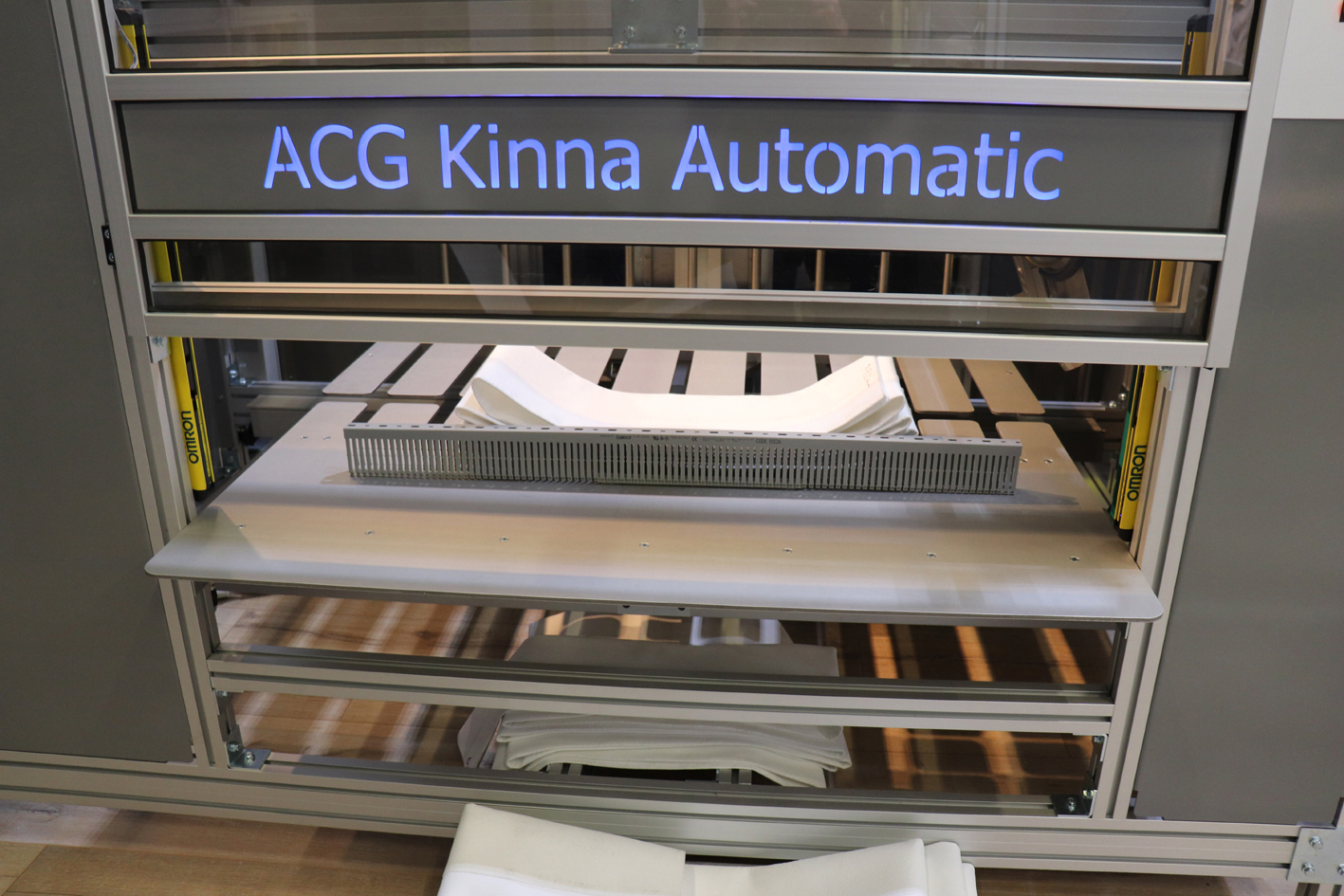
Automatic Snapring and Reinforcement Attaching module
Introducing our Automatic Snap ring and Reinforcement Attaching module (KA-177) the first and only of its kind,
which automatically attaches the reinforcement and snapring with superior speed and accuracy.
Automatic Filterbag Production Line
Introducing our Automated Filterbag Production Line (KA-177) the first and only of its kind, which automatically attaches the bottom, reinforcement and snap-ring with superior speed and accuracy.
More news (3)
Automatic Filter Tube Line
Automatic Filter Tube Line (KA-156) is the leading solution for the producing industry of industrial filter tubes. The all-in-one solution of the KA-156 allows you to produce high quality filter tubes with accurate seams to predefined parameters. This flexible line offers various ways of sewing, welding and taping in your different choice of sizes on filter tubes.
Automatic Bottom Attach Module
Introducing our Automatic Bottom Attach Module (KA-177) the first and only of its kind, which automatically attaches the bottom, with superior speed and accuracy.
Filter Pocket Trimming Machine
The Filter Pocket Trimming machine (KA-196) is a semi-automatic machine which consists of stand, table plate and Pegasus EXT 2 needle overlock machine with top feeding.
The table comes with an infeed conveyor, pre-cutting unit, top feed belts and thread cutter. The operator places the filter bag to a measure stop that is set to a chosen length.
The conveyor belt transports the filter bag to the sewing machine. If needed, the pre-cutter will trim the bag before going into sewing. The thread chain is cut at the beginning
and end of the bag. After sewing is completed, the bag falls into a box or onto a conveyer belt.
Videos 3
Images 4
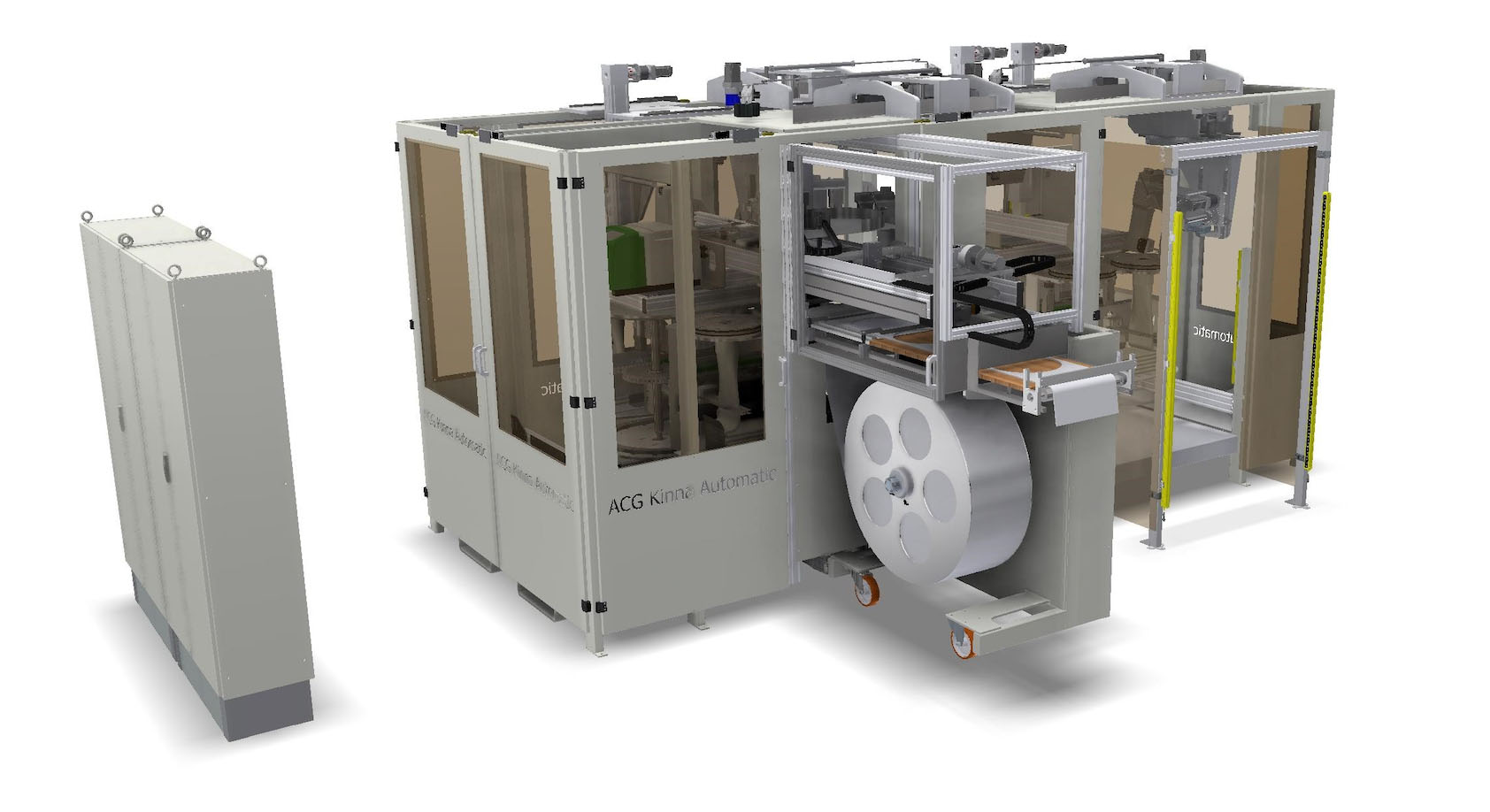
Automatic Filterbag Production Line
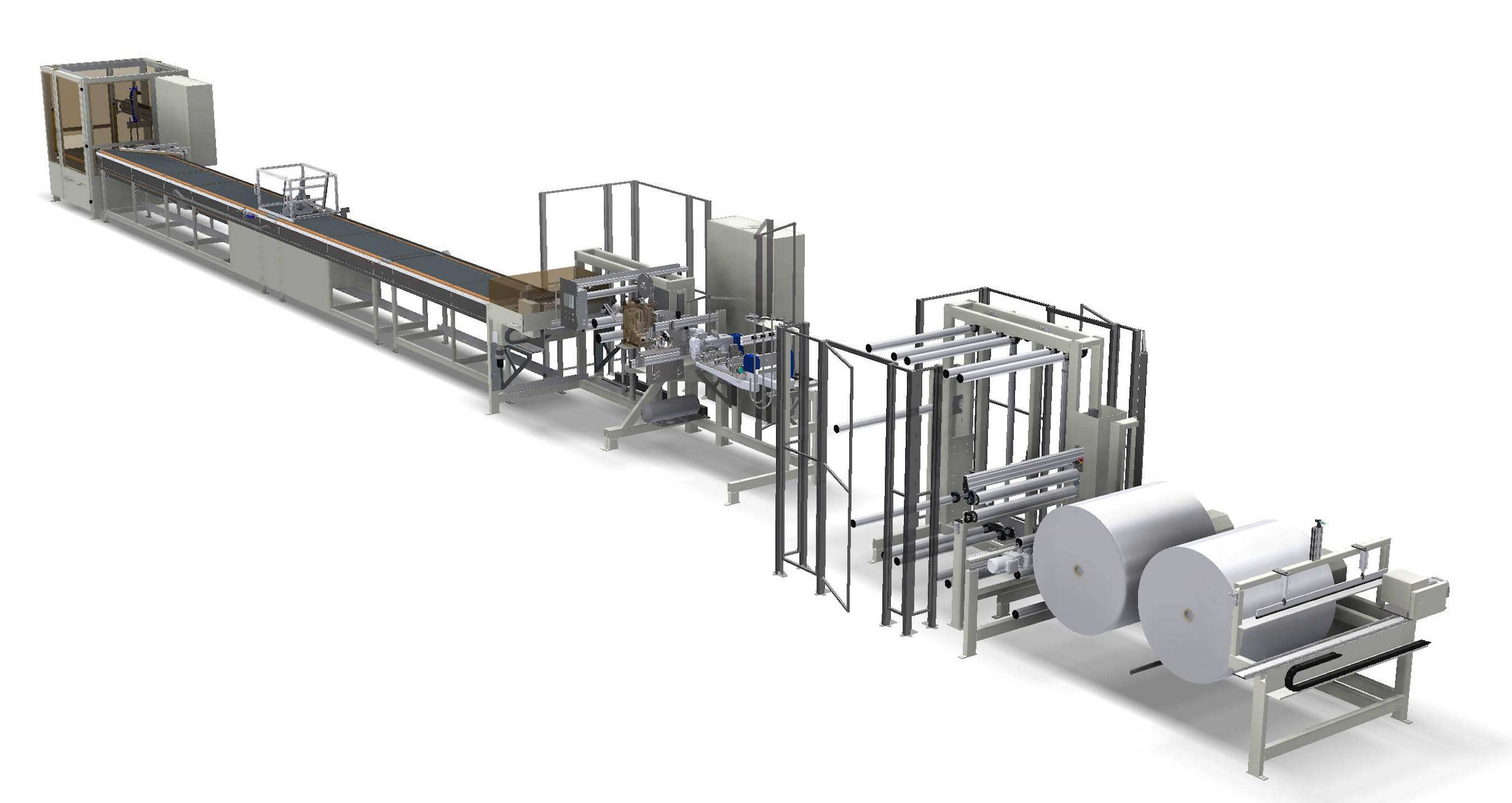
Automatic Filter Tube Line
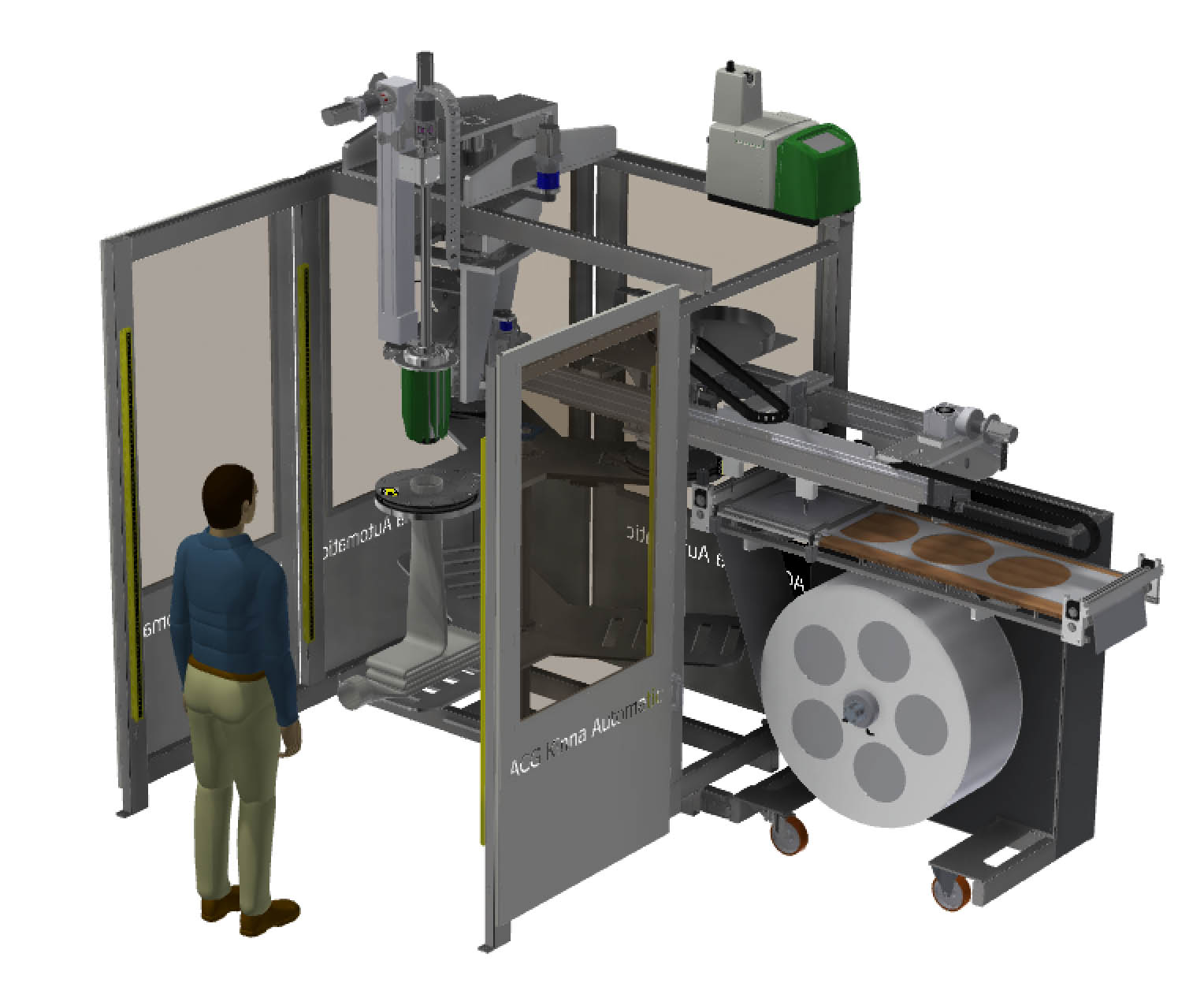
Automatic Snapring and Reinforcement Attaching module
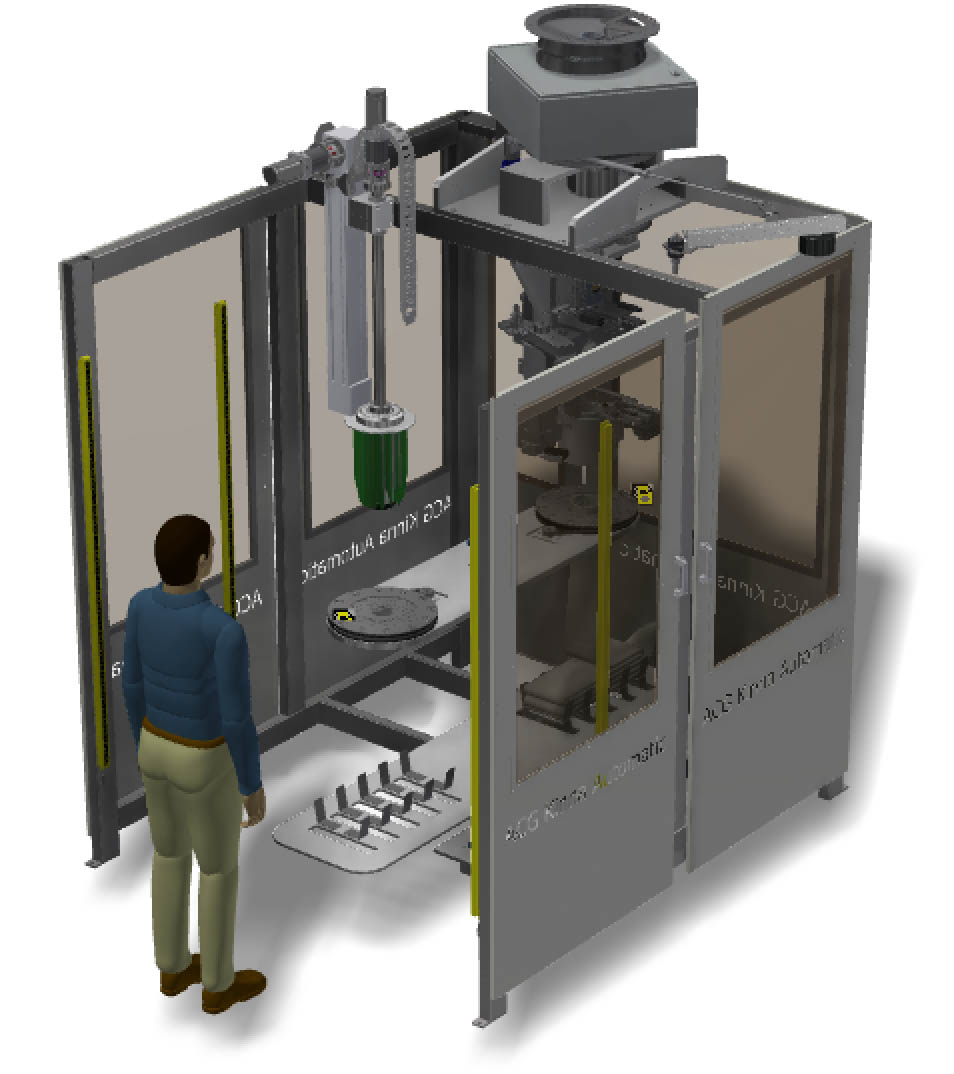
Automatic Snapring and Reinforcement Attaching module