
Company profile
Automatically translated with DeepL.
ACG Kinna Automatic:引领过滤器生产自动化革命
50年来,ACG Kinna Automatic 一直致力于将劳动密集型的纺织制造转变为高效流畅的自动化流程。
如今,我们将这一专业技术带入一个已准备好迎接变革的行业:过滤器生产。
挑战:
数十年来,滤材制造工艺基本未发生变化。复杂的材料、多样的纤维类型以及各异的尺寸
使得自动化似乎难以实现。
我们的解决方案:
凭借五十年纺织自动化领域的专业经验,我们攻克了这一难题。我们的突破性技术解决了曾令整个行业束手无策的复杂问题,
首次实现了滤材生产的真正自动化。
成果:
大幅降低人工成本
提高生产速度和一致性
加强质量控制
提升利润率
这仅仅是可能实现的开端。欢迎莅临我们的展位,了解我们如何提升您的滤芯生产效率,
并充分释放您工厂的全部潜力。
Product areas 13
Industries
What's new 6
Fully automated microfactory for finished filter bags
Until now, woven or nonwoven needlefelt filter bags have been assembled and finished in laborious and time-consuming cut and sew operations by third party suppliers.
To address this issue, Sweden’s ACG Kinna Automatic has developed a microfactory to significantly move forward the production of fully finished filter bags via the latest advanced automation.
Its configuration is based on two separate interconnecting modules – the Automatic Filter Tube Line (KA-156) and the Automatic Filter Bag Production Line (KA-177).
The Automatic Filter Tube Line handles the fabric feeding from rolls and its folding prior to seam construction, which can either be by automatic sewing, welding or with sewing and taping, depending on specifications. Very rapid changeover of the modular seaming methods can be achieved during product changes. The specific size of the now fully tubular fabric is then precisely cut to size for each individual unit and further folded ready to be fed into the Automatic Filter Bag Production Line.
The Automatic Filter Bag Production Line then automatically attaches the reinforcement, bottom and snap rings onto the filter tube with a second Juki sewing head on a robotic arm, to form the fully finished filter bag ready for packaging.
“The automation of these essential steps eliminates the need for the many hours of labour-intensive manual work that has previously been necessary,” says ACG Kinna Automatic Marketing and Sales Manager Tomas Aspenkog. “The output is 120 finished filter bags per hour, and the entire configuration is guided by precise automatic steering and alignment, with quality control handled by the latest high-definition vision cameras. This type of automation is the way forward, not just for filter bags, but for many industries who heavily rely on such consumables in their operations.”
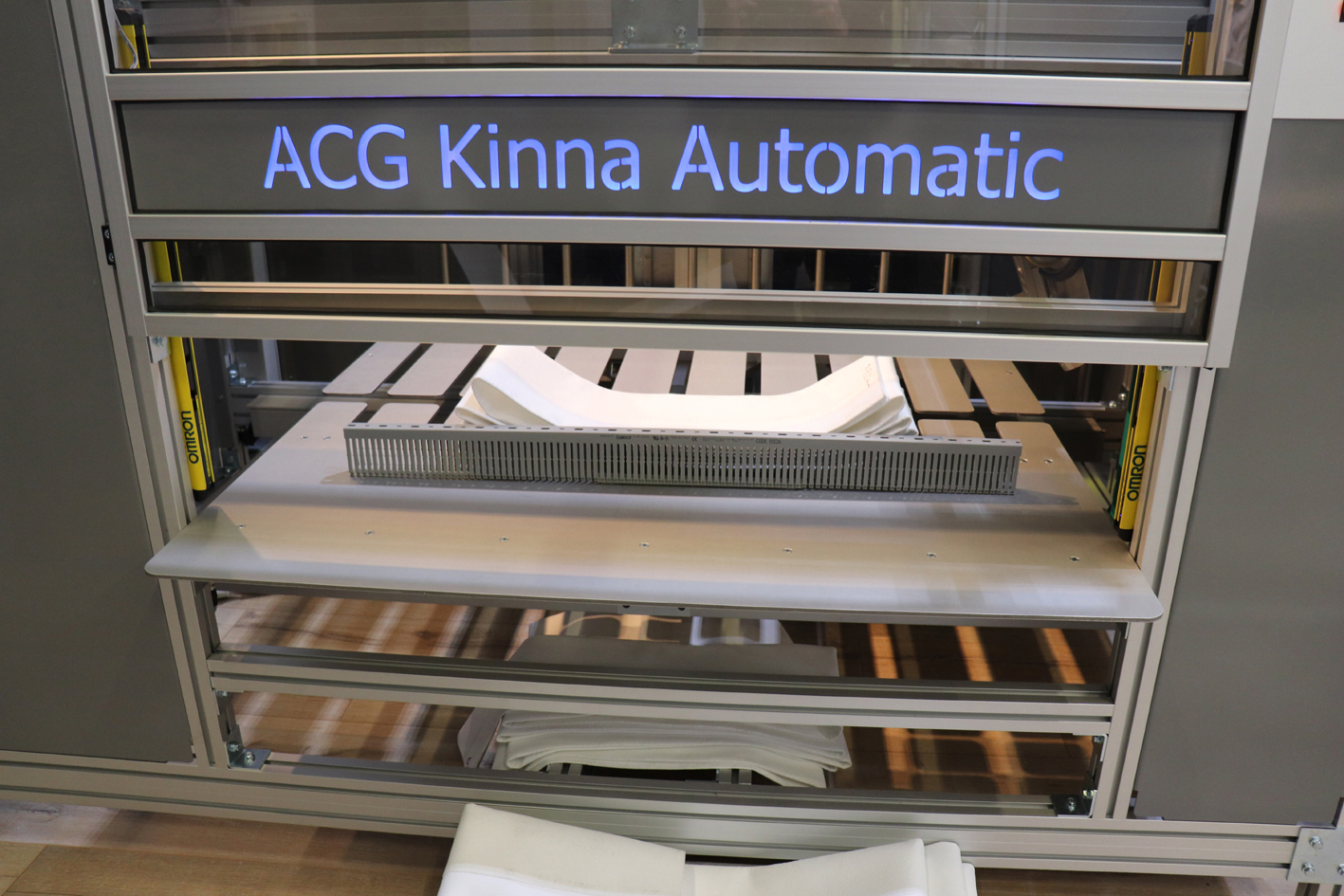
Automatic Snapring and Reinforcement Attaching module
Introducing our Automatic Snap ring and Reinforcement Attaching module (KA-177) the first and only of its kind,
which automatically attaches the reinforcement and snapring with superior speed and accuracy.
Automatic Filterbag Production Line
Introducing our Automated Filterbag Production Line (KA-177) the first and only of its kind, which automatically attaches the bottom, reinforcement and snap-ring with superior speed and accuracy.
More news (3)
Automatic Filter Tube Line
Automatic Filter Tube Line (KA-156) is the leading solution for the producing industry of industrial filter tubes. The all-in-one solution of the KA-156 allows you to produce high quality filter tubes with accurate seams to predefined parameters. This flexible line offers various ways of sewing, welding and taping in your different choice of sizes on filter tubes.
Automatic Bottom Attach Module
Introducing our Automatic Bottom Attach Module (KA-177) the first and only of its kind, which automatically attaches the bottom, with superior speed and accuracy.
Filter Pocket Trimming Machine
The Filter Pocket Trimming machine (KA-196) is a semi-automatic machine which consists of stand, table plate and Pegasus EXT 2 needle overlock machine with top feeding.
The table comes with an infeed conveyor, pre-cutting unit, top feed belts and thread cutter. The operator places the filter bag to a measure stop that is set to a chosen length.
The conveyor belt transports the filter bag to the sewing machine. If needed, the pre-cutter will trim the bag before going into sewing. The thread chain is cut at the beginning
and end of the bag. After sewing is completed, the bag falls into a box or onto a conveyer belt.
Videos 3
Images 4
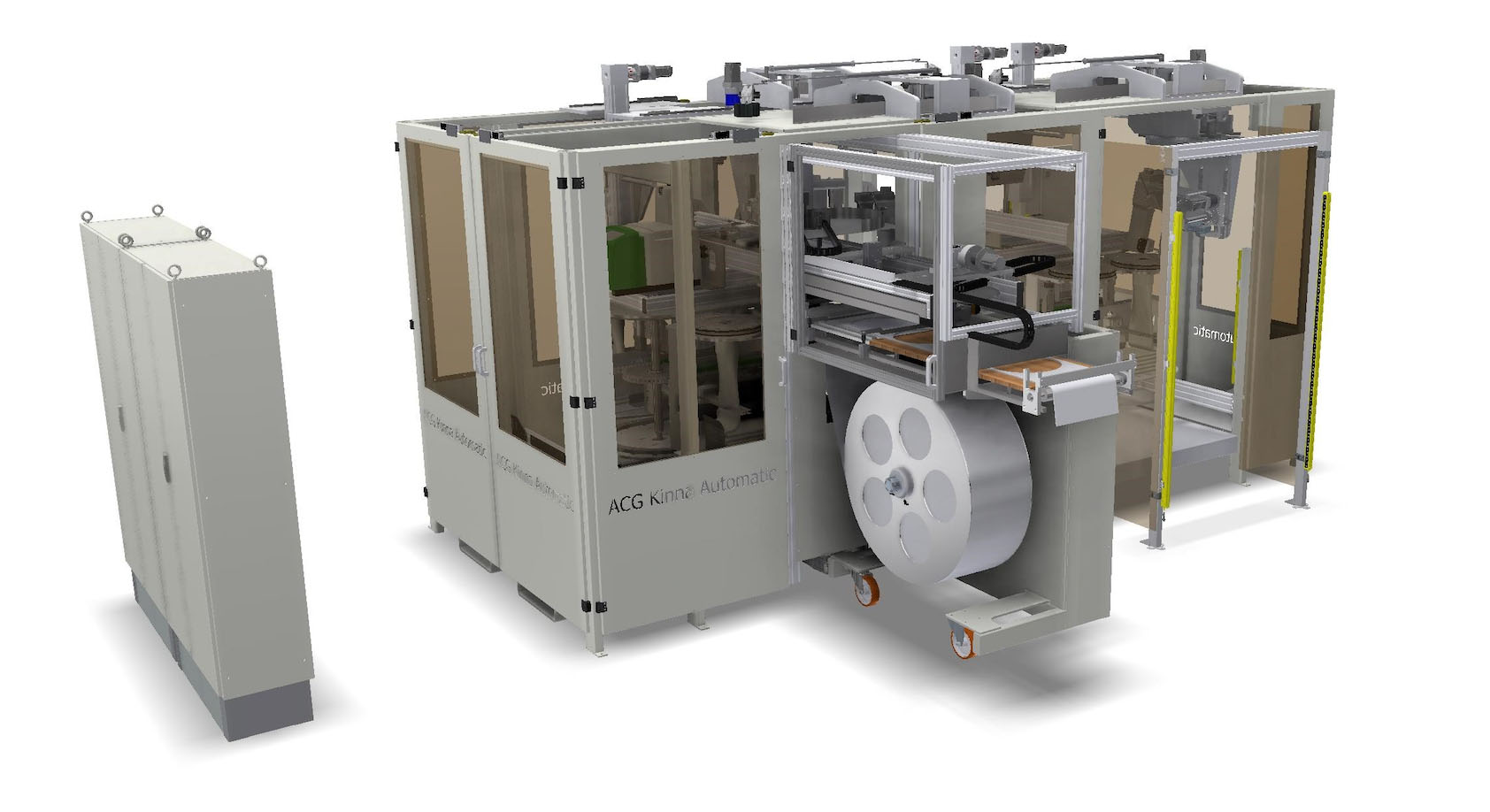
Automatic Filterbag Production Line
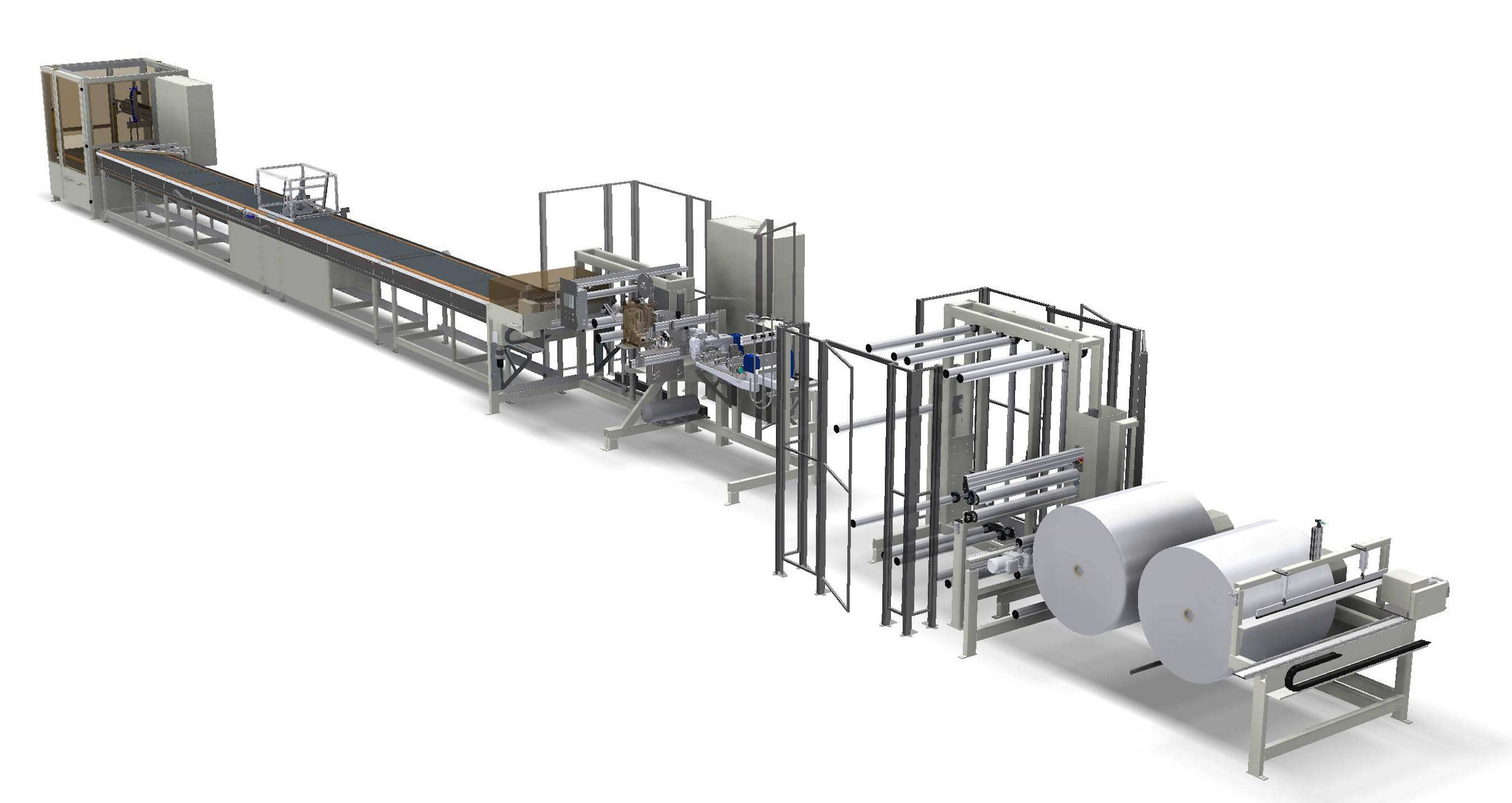
Automatic Filter Tube Line
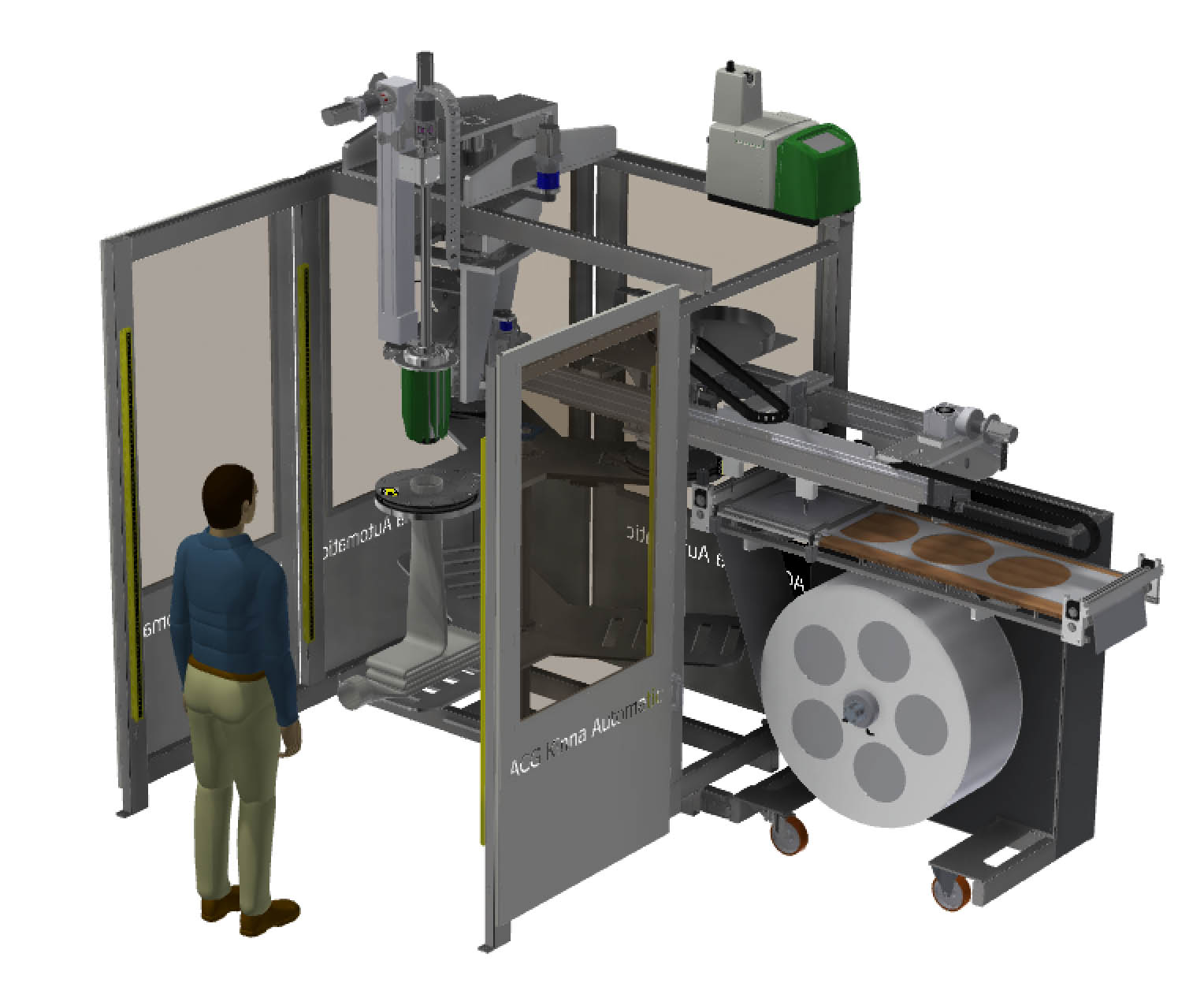
Automatic Snapring and Reinforcement Attaching module
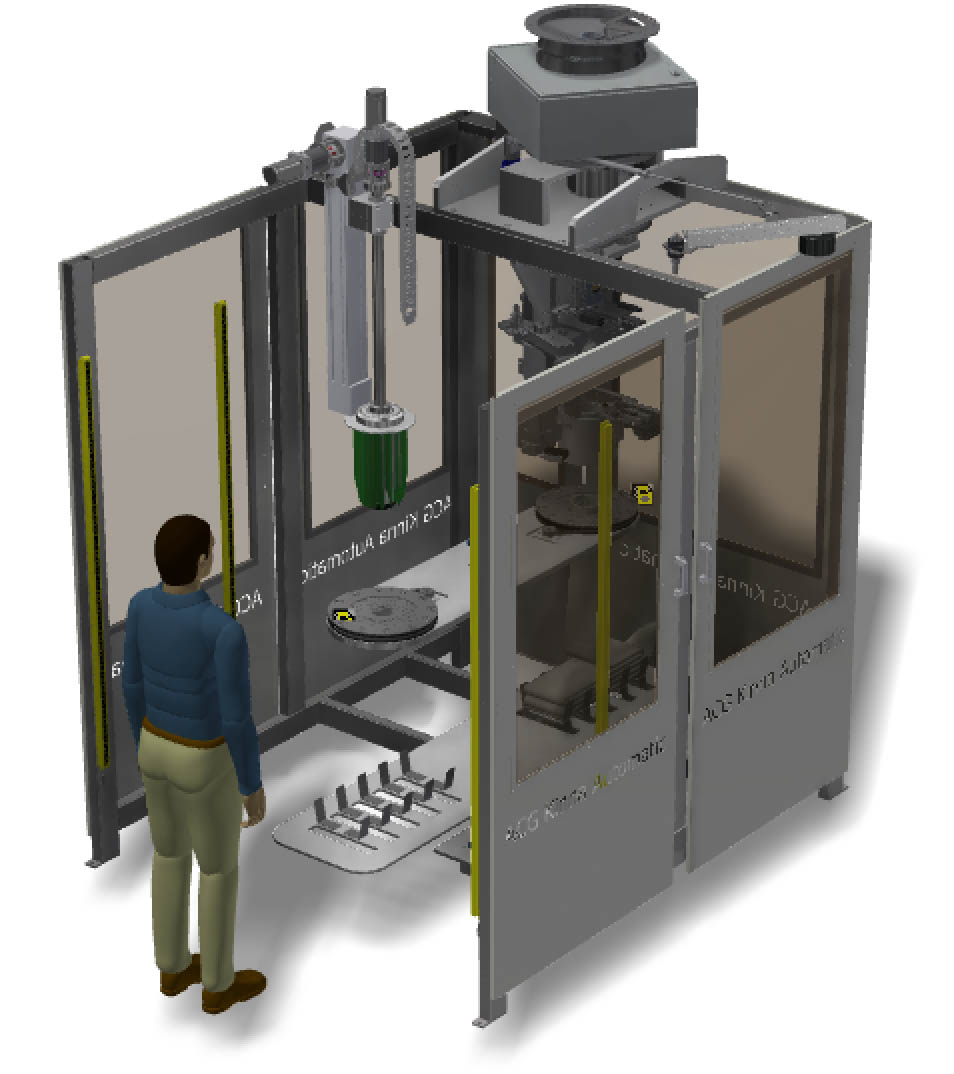
Automatic Snapring and Reinforcement Attaching module