
Company profile
Automatically translated with DeepL.
Pulsar Photonics GmbH는 레이저 기술 분야의 혁신적인 첨단 기술 기업입니다. 이 회사의 서비스 범위에는 레이저 공정 기술, 소프트웨어 개발을 포함한 기계 제조, 그리고 레이저 시스템 기술 부문이 포함됩니다.
창립 이래, 이 회사는 양산화를 위한 접근 방식을 집중적으로 연구해 왔습니다. 고객을 위해 전문적인 애플리케이션 개발 및 양산 준비 단계부터 서비스 및 노하우 이전을 포함한 자동화 생산 장비 구축에 이르기까지 독점적인 서비스를 제공합니다. 펄사 포토닉스는 (초)단펄스 레이저를 활용한 단품 및 양산 생산을 위한 자체 생산 역량에 지속적으로 투자하고 있습니다. 핵심 공정은 구조 형성, 드릴링 및 정밀 절단입니다.
펄사 포토닉스(Pulsar Photonics GmbH)는 아헨에 본사를 두고 있습니다. 이 회사는 2013년 아헨 소재 프라운호퍼 ILT의 스핀오프 기업으로 설립되었으며, 성장 단계에서는 본(Bonn) 소재의 하이테크 창업 펀드(Hightech Gründerfonds, HTGF)로부터 자금을 지원받았습니다. 펄사 포토닉스는 2021년부터 슌크 그룹(Schunk Group)의 일원이 되었습니다.
직원 수가 100명에 조금 못 미치는 이 빠르게 성장하고 있는 흑자 기업은 독일의 중소기업이며, ‘LaserRegionAachen’ 구조 전환 이니셔티브의 일원입니다.
Product areas 10
Industries
What's new 2
Laser-drilled filters and screens for industrial filtration processes
What are the challenges of filtering and screening with micro-perforations?
In many industrial filtration processes, such as material processing for the recycling industry, filters and screens play a central role: They remove particles and contaminants from the material stream, thereby safeguarding the quality of the end product and the stability of downstream processes.
However, high throughput rates, varying material qualities, and abrasive particles place high demands on filtration systems.
Typical challenges in the manufacture and application of industrial filters:
- Uneven filtration due to imprecise or varying pore sizes
- High pressure losses in the process, especially at high flow rates
- Rapid wear of filter structures caused by abrasive particles
- Uneven flow distribution within the filter
- Short filter service life
- Fluctuating quality of the final material
- Laborious filter changes/maintenance and plant downtime
- High material losses due to insufficient separation of contaminants
- Limited precision of conventional manufacturing processes for very small holes in the micrometer range
- Limited design freedom regarding hole diameters and hole geometries
- Clogging of filter openings by fine particles
Traditional manufacturing processes for filter structures quickly reach their limits, especially when dealing with high throughput rates, fine particle sizes, and heavily contaminated material streams.
Our Solution: Filter holes created by laser machining
Laser processing enables the production of high-precision holes in metals for filter and screen applications, such as those used in the recycling industry. Even very small hole diameters and high hole densities can be achieved with consistent results—a key requirement for stable filtration processes.
Compared to mechanical manufacturing processes, laser processing offers significant advantages for the production of modern filter structures:
- Contactless & burr-free machining with no tool wear
- Precisely defined hole diameters down to 100 µm and tight tolerances
- Reproducible filter geometries
- High hole densities for efficient filtration
- Flexible adaptation of hole patterns and filter designs
- Machining of all metals
- Uniform flow distribution thanks to precise, burr-free micro-drilling
- Longer filter service life and more stable process conditions
This allows filter systems to be tailored specifically to the requirements of demanding filtration processes - for example, in material reconditioning, polymer processing, or powder processing.
Machine Solution for precise laser drilling of filtration systems
Pulsar Photonics has developed a specialized line of laser systems for the industrial processing of filter plates and screens.
The RDX2Drill laser machine enables the precise automated laser drilling of large numbers of holes in filter structures.
Laser drilling redefined: Pulsar Photonics’ RDX2Drill works in single-pulse mode
Drilling thick metal sheets precisely and efficiently
Pulsar Photonics uses the single-pulse drilling process in the new RDX2Drill series to precisely and efficiently “shoot” holes in thick metal sheets. The plus: Sieves or filters made of high-strength materials and thick sheets can now also be micro-drilled with the laser. Such filters can therefore withstand high pressures or the strongest mechanical stresses.
Pulsar Photonics GmbH from Aachen deliberately uses single-pulse drilling for its RDX2Drill machine series. “These are high-energy pulses that do not work in an ultrashort pulse cycle, as is usually the case, but last microseconds or even milliseconds,” explains Philip Oster, Head of Laser Application Center. “They therefore have so much energy that each pulse basically shoots a hole in the material.”
If the laser “shoots” 50 holes per second …
Although the process does not have as many pulses per time as the ultrashort pulse laser, the speed is still impressive. For example, one user is currently running a process with 1.5 millimeter thick stainless steel sheet metal in which the RDX2Drill is laser drilling 50 holes per second. In his opinion, this value can be increased even further. The new system can therefore drill up to hundreds of thousands of holes with diameters of 100 to 400 micrometers in metallic materials with a material thickness of 0.5 to 1.5 mm with the utmost precision. Oster: “The efficiency and costs, primarily in the production of holes with diameters of around 200 micrometers, clearly speak for our laser drilling.”
A QCW (Quasi Continuous Wave) fiber laser with an output of several kilowatts perforates workpieces with a wavelength of 1060 to 1080 nm (infrared). One of the strengths is the combination of flexible system technology from the modular system with individual software. Oster: “One of our unique selling points is the Photonic Elements machine control system, which we have developed, designed and perfected exclusively for laser processing.”
Special software only for laser processing
Photonic Elements enables precise control and optimized process management, increasing the precision and efficiency of laser drilling. The digital control also allows you to switch quickly and easily between different component variants. This is a particular advantage for sieves and filters with high material thicknesses, which are subject to high pressure loads and require precise, customer-specific drilling patterns. Introducing this process was a challenge, emphasizes Oster: “With this melt-based process, we have to remove several hundred grams of melt per component. For this reason, the systems are equipped with an enclosure that surrounds the process area. The majority of the melt is extracted, collected and disposed of safely.
Automatic focus tracking instead of component distortion
The process generates a lot of heat in the component, which leads to distortion. Automatic focus tracking, which compensates for component deformations caused by thermal stress, for example, has proven itself as a countermeasure. With the purchase, the user is entering a complex technology that requires special training from the Aachen-based company: Nevertheless, it is worth getting started because the new RDX2Drill series is suitable for many applications: for example, sieves and filters for waste water filtration, hydrogen production, recycling and energy generation.
Videos 1
Images 4
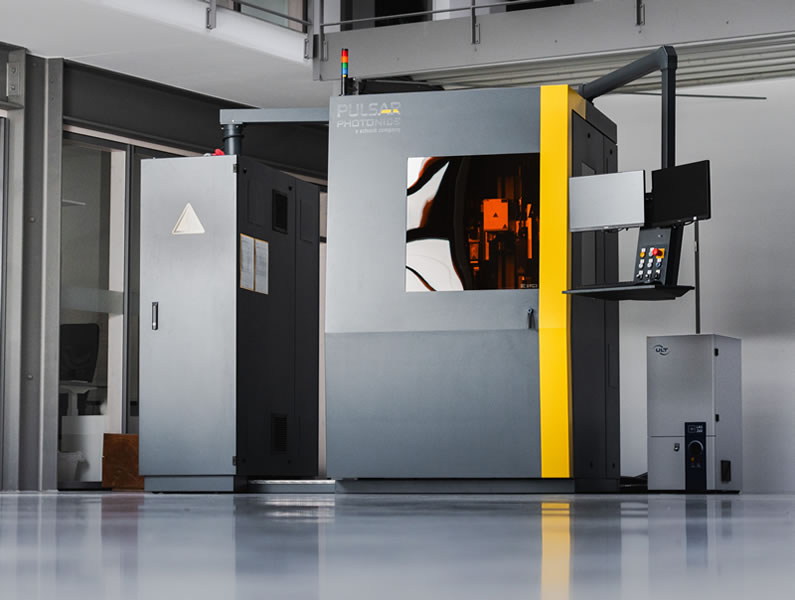
RDX2Fiber Laser Drilling Machine
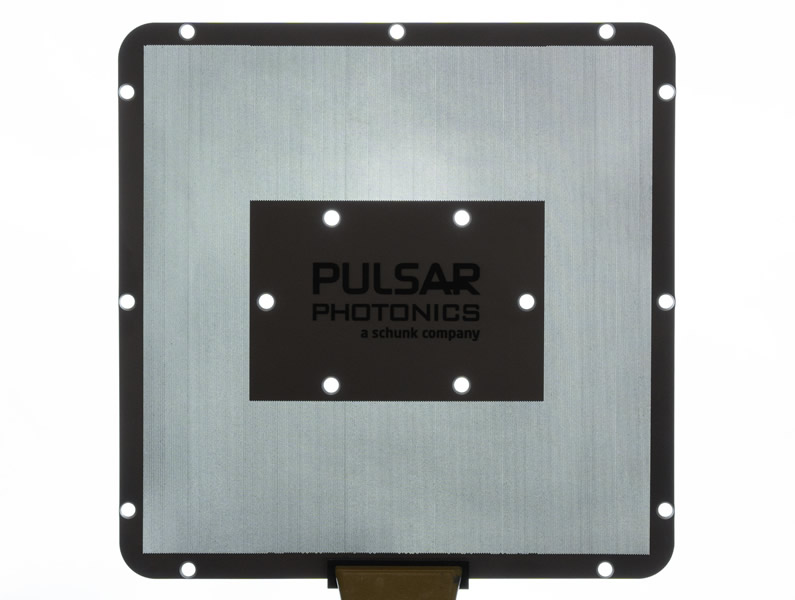
50 holes every second: The RDX2Drill series enables the drilling of 100 to 400 micrometer holes in metallic materials with high precision.
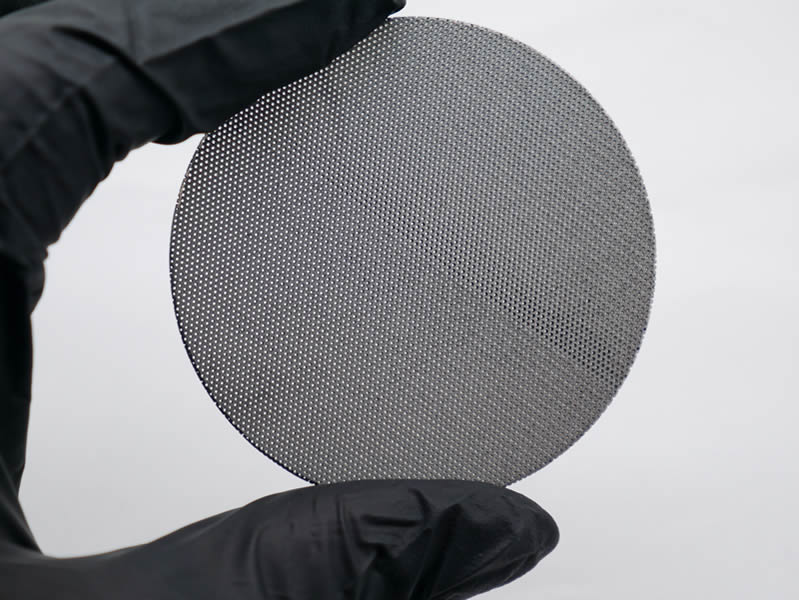
Filter application

Laser drilling